
If you are planning a holiday to southern Italy, you might be wondering whether you actually need a car to get around.
The short answer is yes, especially once you’re staying somewhere quieter than Bari or Lecce town centre. Trains and buses cover the bigger towns well, but the coves, the countryside villas, and the roads lined with olive groves that make Puglia worth visiting sit beyond where public transport reaches. This guide covers what you need to know about driving in Puglia, from the documents in your glovebox to the roads you’ll actually meet, plus an option worth knowing about if you’d rather not drive at all.
Before you go, here’s what matters most:
- The Car Verdict: Independent transport is essential if you plan to stay in private countryside villas or want to explore secluded coastal beaches.
- International Permits: Visitors from outside the EU and the UK must secure an International Driving Permit alongside their domestic license before departing.
- Limited Traffic Zones, known as ZTLs: Historic town centers are closed to non-resident vehicles, meaning you should plan to park outside the old stone walls to avoid automated camera fines.
Do you need a car in Puglia?

Yes, if you’re staying anywhere outside Bari, Lecce, or Brindisi’s town centres, driving in Puglia is the only realistic way to reach it. The regional train network connects the bigger towns well enough, but once you’re through the ticket barrier, you’re on foot unless you’ve arranged something else. Puglia’s private villas, its best beaches, and its quietest towns tend to sit down long, single-lane roads that no train timetable will ever reach. Buses exist, but the network thins out fast south of Lecce, and taxis are scarce and expensive once you’re away from the coast. For a stay built around a countryside villa or a stretch of Salento coastline, having your own transport, or a driver arranged on your behalf, gets you to the Puglia most visitors only see in photographs.
What you need to drive in Puglia as a tourist
Before you land, it’s worth checking off a short list of documents. None of it is complicated, but getting it right at home saves an awkward conversation at the rental desk.
- A valid driving license held for at least the minimum period required by your home country.
- An International Driving Permit (IDP) if your license was issued outside the EU or the UK. This is a legal requirement in Italy rather than a rental company preference. It is inexpensive to acquire and must be arranged through your local motoring authority before you travel.
- A valid passport or national ID card.
- Your rental booking confirmation and a physical credit card in the lead driver’s name for the security deposit.
- The vehicle’s registration and insurance documents, which your rental agency will place in the glovebox. Worth keeping there for the duration of your stay in case you’re asked for them.
Note: Most companies set the minimum driving age at 18, with a surcharge if you’re under 25 or over a certain age, so it’s worth checking the fine print when you book.
Self-drive, private driver, or a bit of both
Not every visitor wants to be behind the wheel, and there’s a real alternative if that’s you. Our concierge team can meet you at the airport and provide a private driver for the full length of your stay, taking you to hidden beaches or dinner with a view, turning the car into part of the holiday rather than a means of getting somewhere.
If you’d still rather drive yourself but want to skip the queue for a rental car on arrival, there’s a middle option too. We arrange a private transfer straight to your villa on landing night, then have a rental car delivered to your door the next morning once you’re rested. You skip the airport counter and still have a car for the rest of the stay.
And for those who want the drive itself to be part of the memory, a vintage car is worth considering. Winding along the coast in something with real character suits Puglia’s slower pace, and it can be arranged separately from your transfer, delivered straight to the villa the same way.
Whichever combination sounds right, our concierge team can set it up. Explore our concierge services to see how it fits into your stay.
Where to pick up a car, and why it matters if you’re headed south
Bari and Brindisi airports are the two most convenient pickup points, both with a good range of international rental desks and better prices than picking up in a city centre. Our guide to getting to Puglia covers flight routes and transfer options into each one. Which one makes sense depends on where you’re staying. If your villa is in Salento, near Gagliano del Capo or Santa Maria di Leuca, Brindisi is the shorter drive by a wide margin, often an hour or more less than starting from Bari. Lecce also has rental options right in town, though picking up there means starting your trip on narrow streets rather than open road, worth avoiding if the airport is an option instead.
Once you’re choosing a car, go smaller than you think you need. Puglia’s countryside lanes and old town streets weren’t built with SUVs in mind, and a compact or mid-size car will get you everywhere a larger one will, with considerably less worry about the wing mirrors.
The roads you’ll actually drive on
Puglia’s roads fall into three broad categories, and knowing which is which helps you plan your pace.
- Autostrada (highway): fast, well-signed, and the quickest way to cover distance. The A14 runs the length of the Adriatic coast; you’ll collect a ticket on entry and pay on exit.
- Strade statali and provinciali (state and provincial roads): no toll, generally in good condition, and usually where the scenery starts. Speeds here sit around 90km/h, though always check the signage as it changes with the terrain.
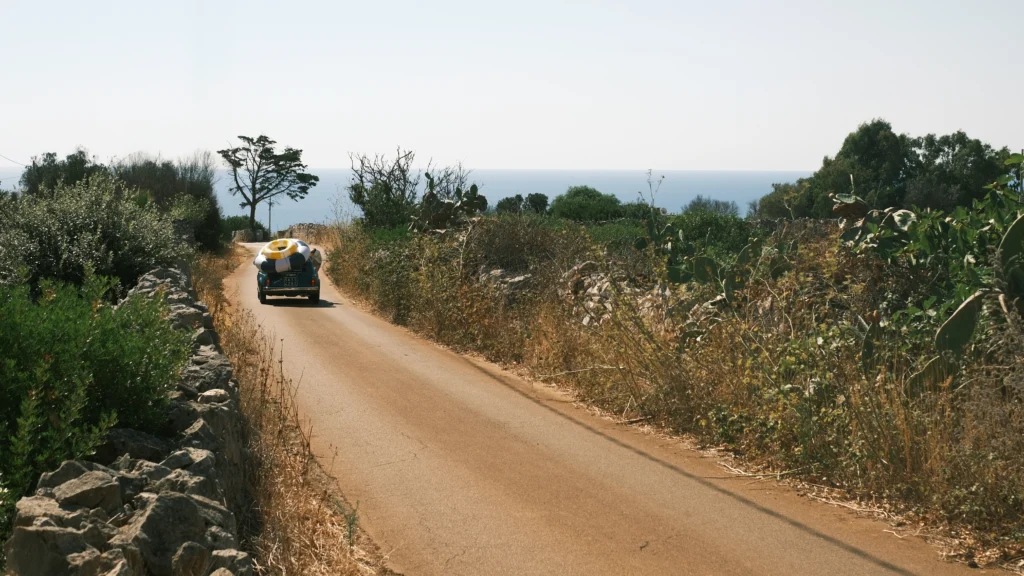
- Countryside lanes: narrow, sometimes unpaved, occasionally barely wider than the car. These lead to the villas, masserie, and beaches that make the detour worth it, and they call for a slower pace and, ideally, a smaller car.
Puglia itself is largely flat, so none of this makes for difficult driving. The one exception is the Gargano peninsula in the north, where the roads climb and wind considerably more than anywhere in Salento or the Valle d’Itria.
What driving in Puglia actually feels like
Nobody signals before a turn here, and roundabouts operate more as a suggestion than a rule. The first hour can feel like a lot to take in, especially if you’re used to more orderly roads at home, but it settles quickly. Overtaking happens on roads that don’t look wide enough for it, and a flash of headlights from an oncoming car usually means there’s a police check ahead, a small courtesy passed between strangers.
Once you’re past the busier stretches near Bari or Monopoli, the pace slows on its own. Country roads wind between dry stone walls and olive groves, and there’s rarely anyone behind you in a hurry. It’s worth building this into your own pace too. Slow down, let faster drivers pass if they want to, and treat the drive itself as part of the day rather than the bit before it starts. Puglia rewards a driver who isn’t in a rush, and most of the roads make that easy once you stop expecting them to behave like the ones at home.
ZTL zones and parking, how not to get fined
The single most common way tourists get fined in Puglia has nothing to do with speed. It’s the ZTL (Zona a Traffico Limitato), the restricted zone that closes most historic town centres to non-resident traffic. The restriction runs around the clock and applies to anyone without a resident’s permit, including guests staying the night, and the fine arrives by post months after you’ve gone home, so it’s worth learning to spot the sign before you need to.
- ZTL signs are white circles with a red border, sometimes with a camera symbol, and increasingly with a traffic light that turns red when the restriction is active.
- A hotel or villa booking inside the centre doesn’t grant an exception. The restriction applies to visiting traffic regardless of where you’re staying.
- Park at the edge of the historic centre and walk in. It’s rarely more than a few minutes, and it removes the ZTL question entirely.
- Parking lines are colour-coded: blue means paid parking, white means free, and yellow is reserved for permit holders only. In many towns, you can pay for parking in blue-lined spaces using the EasyPark app.
- If you do pick up a parking fine, paying it locally and quickly is usually cheaper than waiting for the rental agency to process it after you’ve left.
It’s also worth knowing that Puglia has one of Italy’s higher rates of car break-ins, so treat your rental the way you would anywhere unfamiliar: nothing valuable left visible on the seats, and a well-lit spot when you have the choice.
Reaching your villa, driving in the Puglian countryside
The closer you get to a countryside villa, the quieter the roads become, and the less they resemble anything on a map. In Salento especially, the last stretch to a villa near Gagliano del Capo or Santa Maria di Leuca often runs down a single lane between dry stone walls, with olive trees leaning in from either side. Google Maps gets you most of the way, but it can lose confidence on the final few hundred metres, so don’t be surprised if it suggests a track that looks more like a driveway than a road.
This is normal, and it’s part of what makes these stays feel private in the first place. Take it slowly, watch for oncoming cars on the narrowest stretches, and trust that the gate really is at the end of the lane it’s pointing you down.
Two things make that final stretch easier. First, ask our concierge team to send you a direct GPS coordinates pin via WhatsApp before you set off; it’s a more reliable guide than an address alone on the narrowest lanes. Second, where your schedule allows, aim to arrive in daylight; navigating unlit, winding, stone-walled lanes for the first time is considerably easier before dark. Daylight hours shift a fair amount across the year here, so it’s worth factoring that in when you’re weighing up the best time to visit Puglia for your trip.
If all of this sounds like more navigating than you’d like on your first evening in Puglia, it’s worth mentioning again: our concierge team can arrange a private transfer straight from the airport, so your first experience of that final stretch of road is as a passenger.
Scenic drives worth the detour
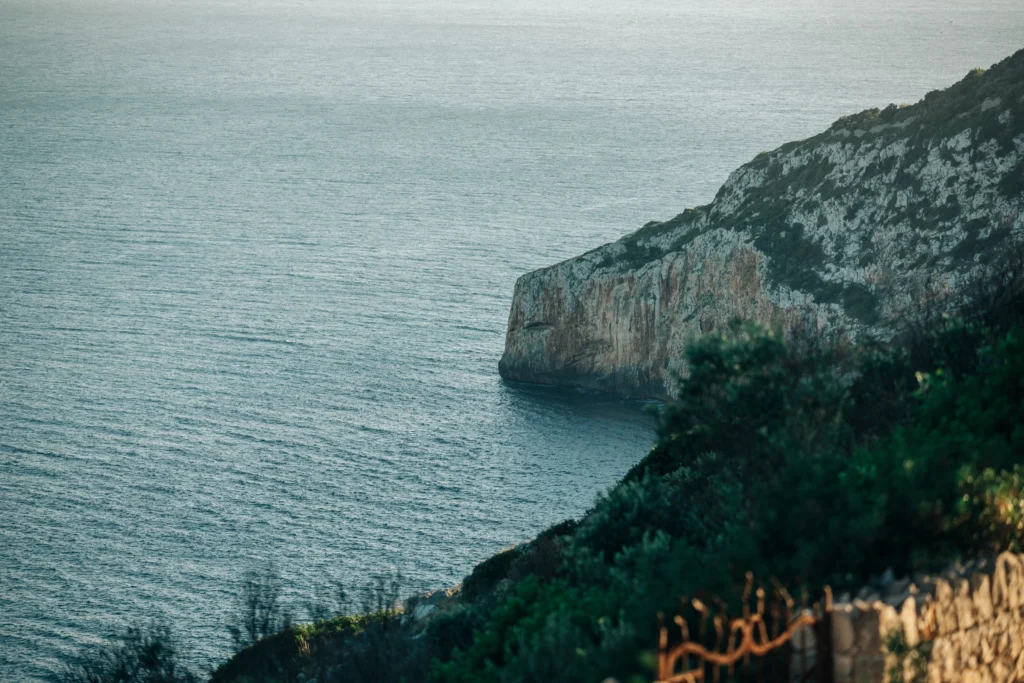
If you have an afternoon free and no particular destination in mind, a few routes are worth seeking out on purpose.
- The coastal road between Otranto and Santa Maria di Leuca runs close to several of our Salento villas, past Castro and Santa Cesarea Terme, with the sea in view for most of the drive. It’s an easy afternoon out and back, easily done without setting aside a whole day.
- The Valle d’Itria backroads around Locorotondo, Cisternino, and Martina Franca wind past dry stone walls and trulli houses, and reward getting a little lost more than any set route does.
- The Gargano peninsula, further north, has the most dramatic coastal views in the region, with roads steeper and windier than anywhere in Salento. Plan a full day for it.
Whichever route you choose, none of them are far from where you’re staying. Explore our villas to see which is closest to your own front door.
FAQ: driving in Puglia
Can you drive in Puglia as a tourist without an Italian licence?
Yes. A full driving licence from your home country is enough, though visitors from outside the EU and UK will also need an International Driving Permit.
Do I need an International Driving Permit to drive in Puglia?
If your licence was issued outside the EU or UK, yes. It’s a legal requirement rather than a rental company preference, and it’s worth arranging before you travel rather than assuming you won’t be asked for it.
Is driving in Puglia difficult for a first-time visitor?
Not especially. The main roads are well maintained and well signed, and most of the region is flat. The adjustment is more about local habits, like optional indicators, than about difficult terrain, aside from the Gargano peninsula.
Can you get around Puglia without a car?
To some extent. Trains and buses connect Bari, Lecce, and Brindisi reasonably well, but the countryside villas, quieter beaches, and smaller towns that make Puglia worth visiting sit beyond where public transport reaches.
Is it worth hiring a driver instead of renting a car?
For many visitors, yes. It removes the need to navigate ZTL zones, parking, and unfamiliar roads entirely, and it turns the drive itself into part of the stay rather than a task to get through.
However you arrive
However you arrive, the drive is part of what makes a stay in Puglia different from a typical Italian holiday. We look after exclusive villas across two distinct landscapes, ranging from private coastal retreats in Salento to historic countryside trulli tucked into the olive groves of the Itria Valley. Wherever you land, our concierge team can meet you at arrivals, arrange a private transfer straight to your villa, or have a rental car delivered to your door once you’re settled in, whichever combination suits your trip best.
Explore the full collection of villas at Puglia Luxury Homes, or get in touch with our concierge team to start planning how you’ll get around once you’re here.