Things to Do in Lecce: A Local Guide

Key Takeaways
- Lecce’s Baroque old town is built almost entirely from a local honey-coloured stone, and it’s compact enough that most of its churches, ruins, and gates sit within a fifteen-minute walk of each other.
- International visitors made up 56 per cent of Lecce’s tourists in 2025, up from just 35 per cent in 2019, according to the region’s tourism observatory, as the city cements its place as one of southern Italy’s fastest-growing destinations.
- Lecce also works beautifully as a base for the wider region, with the Salento coast and the Valle d’Itria both within easy reach for day trips, and the province now leads all of Puglia for overnight stays.
Why Visit Lecce
Lecce has quietly become one of southern Italy’s fastest-growing destinations. Just a few years ago it was still mostly a domestic secret. Today, more than half its visitors travel from abroad, and it’s not hard to see why once you’re standing in the old town. Everyone calls it the Florence of the South, though the comparison undersells it slightly. Lecce still moves at its own pace, and even in August the old town rarely feels like it’s buckling under the crowds the way Italy’s bigger art cities can.
The whole city is built from pietra leccese, a soft local limestone that carves easily and turns the colour of honey in the late afternoon light. Every church and palazzo here is dressed in carvings, cherubs, and flourishes designed to be noticed slowly, one detail at a time. The appeal comes from wandering for an hour or two and letting dozens of small details accumulate, more than from picking out any single monument to tick off. This guide covers what’s actually worth your time, what it costs, and where to stay if you decide to linger.
The Best Things to Do in Lecce
Wander the Historic Centre

Lecce’s centro storico rewards exactly the kind of aimless wandering that feels like wasted time anywhere else. The streets are blissfully narrow, the piazzas appear without warning, and the Baroque facades rarely announce themselves head-on. They catch your eye from one angle on the street, never lining up neatly from the front.
Give it an afternoon with no destination in mind. You’ll pass workshops still making cartapesta, the papier-mâché figures that have been a Lecce speciality since the seventeenth century, and find courtyards behind doors that look like they lead nowhere. If the heat gets to be too much, Villa Comunale, the main park, is shaded and free to sit in for as long as you like.
Piazza del Duomo and Lecce’s Grand Churches
Piazza del Duomo is one of the only fully enclosed squares in Italy, which is part of why it feels so theatrical when you first walk into it, especially early morning or just before sunset, when the stone turns gold and the tour groups haven’t arrived yet. The Duomo itself was rebuilt between 1659 and 1670 by Giuseppe Zimbalo, the architect most responsible for the Lecce Baroque look, and his bell tower is visible from most of the old town.

- Opening Time: Daily, roughly 9am to 9pm, with shorter hours off-season. Visits pause around service times.
- Address: Piazza del Duomo 5, 73100 Lecce.
A few minutes’ walk away, the Basilica di Santa Croce is the building everyone photographs, its facade built up over more than a century and finished with Zimbalo’s own additions on the upper level, including cherubs, gryphons, and a rose window that rewards a slow look.
- Opening Time: Daily, roughly 9am to 9pm, with shorter hours off-season.
- Address: Via Umberto I 1, 73100 Lecce.
Pro Tip. Neither church sells a single-site ticket on its own. The LeccEcclesiae combo covers both, plus Santa Chiara, San Matteo, and the old seminary, for €11 adult, €5 for ages 12 to 17, or €24 for a family, valid for 15 days so you don’t need to see everything in one go. Add the bell tower climb for €21 total if you want the view over the rooftops. The piazza itself is free to sit in at any hour, and does a lot of the work on its own even if you skip the ticket entirely.
The Roman Ruins Hiding in Plain Sight
You’ll likely walk past the Roman Amphitheatre before you register what it is, half sunk into Piazza Sant’Oronzo as though the city simply grew up around it and forgot to mention it was there. That’s roughly what happened. It lay completely buried until 1901, when workmen building a bank stumbled into it by accident. It’s free to look down into from the piazza at any time, which is honestly all you need, though the horseshoe-shaped arena once held around 15,000 people for gladiatorial games, worth a moment’s pause before you head off to your next coffee. Go early if you want the photo without the crowd, since the piazza fills in fast by mid-morning. If you’d rather walk down into the arena itself, the excavated section is now open daily following a 2023–2024 restoration.

- Ticket Price: Free to view from the piazza at any time. €5 to enter the excavated section.
- Opening Time: Daily, 10am to 5pm.
- Address: Piazza Sant’Oronzo, 73100 Lecce.
Walk Through the Ancient City Gates

All three of Lecce’s surviving gates are free to visit and always open. They’re monumental punctuation marks dropped into the middle of ordinary streets, not sites you queue for.
- Porta Napoli, built in 1548 in honour of Charles V, is the grandest of the three, modelled loosely on a Roman triumphal arch and best seen with the late sun behind it.
- Porta Rudiae, the oldest gateway, carries statues of the city’s patron saints, though much of what stands today was rebuilt in 1703 after the original collapsed.
- Porta San Biagio, at the quieter southern edge of the centre, gets the fewest visitors of the three, which makes it a good spot for a slow coffee and a warm cornetto without anyone else’s elbows in your photo.
- Address: Via Ascanio Grandi 56/58, 73100 Lecce.
Taste Your Way Through the City

Start with pasticciotto, a small shortcrust pastry filled with warm custard, best eaten standing at the counter. Caffè Alvino, right on Piazza Sant’Oronzo, is one of the most reliable places for it, ideally paired with a caffè leccese, iced espresso sweetened with almond syrup that works just as well at 9am as it does at 4pm. Neither will cost you more than a couple of euros, so there’s no reason to only try one.
As the evening cools, join the passeggiata, the unhurried stroll that loops between Piazza Sant’Oronzo and Piazza del Duomo, then find a spot for aperitivo, where most bars set out a few snacks alongside your drink without being asked. Lecce sits in the middle of Puglia’s wine country, primitivo and negroamaro both grown close by, and the historic centre has a solid concentration of wine bars if you’d rather sit than wander. For dinner, look for a trattoria that leans on cucina povera, the region’s traditional peasant cooking: orecchiette, wild chicory, whatever’s in season.
Later on, Quanto Basta is generally considered the city’s best cocktail bar, and Mama Elvira is the better option if you’d rather stick to a glass of Pugliese wine somewhere quieter. Most of the liveliest bars cluster around Piazza Sant’Oronzo and the streets just behind the cathedral, so you’re rarely more than a few minutes from somewhere good.
Day Trips from Lecce
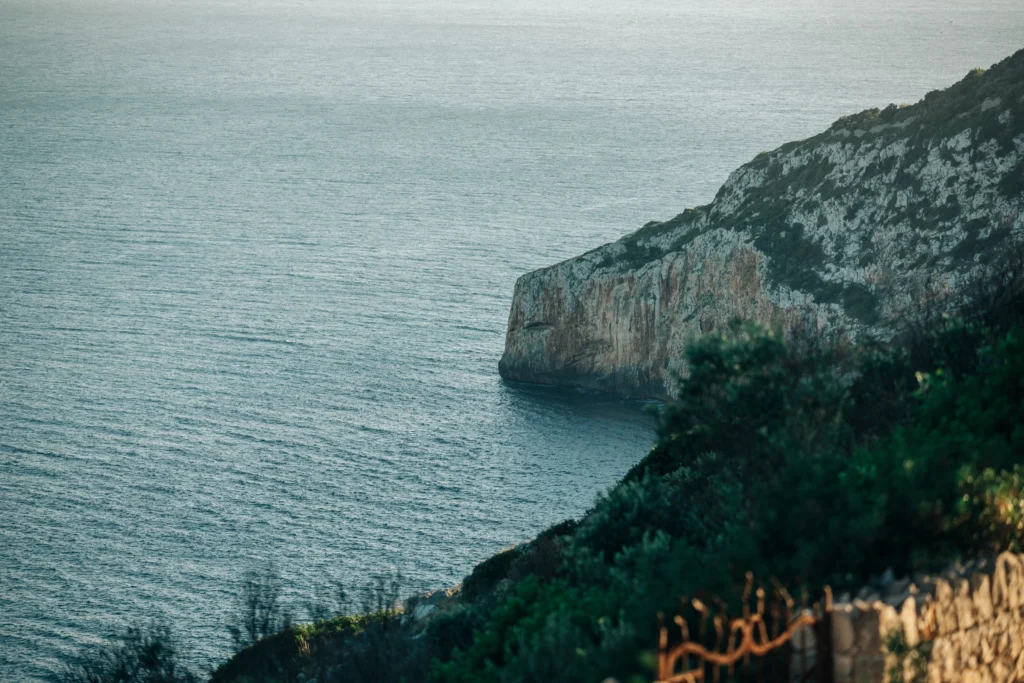
Lecce sits almost exactly in the middle of the Salento peninsula, which makes it a good base for exploring the region, not just a stop on the way to somewhere else. The SP358 coastal road runs about 80 kilometres from Otranto down to Santa Maria di Leuca, hugging the cliffs with sea views, and a fair amount of salt in the air, for nearly the whole drive (our guide to driving in Puglia covers what to expect on the road itself), and it’s worth doing even if you only get as far as Castro or Santa Cesarea Terme before turning back.
Otranto and Gallipoli are each about forty minutes away, one on the Adriatic side and one on the Ionian, and both are worth a half day on their own. Further south at Santa Maria di Leuca, you can pick up a boat trip out to the sea caves where the two coastlines meet. In the other direction, the Valle d’Itria and its trulli towns, Locorotondo, Cisternino, and Alberobello among them, sit around ninety minutes away by car, with Ostuni’s white old town a good final stop before heading back.
When to Visit Lecce
May, June, September, and October are the sweet spot, warm enough for long, golden evenings outdoors, without the July and August crowds or the kind of heat that makes walking the old town at 2pm a bad idea. (For a broader seasonal breakdown across the region, see our guide to the best time to visit Puglia.) Summer does bring the best evening atmosphere and most of the festivals, so it’s a real trade-off, instead of a season to avoid outright. Winter is quiet, some restaurants cut their hours, but the old town is still worth a visit if you don’t mind cooler evenings and having it mostly to yourself.
How Long Should You Spend in Lecce?
A single well-planned day covers the highlights, including the Duomo, Santa Croce, the amphitheatre, and a wander through the centre. Stay two or three nights if you want time for the wine bars, a proper dinner, and at least one day trip to the coast or the Valle d’Itria. Given how central it sits within Salento, Lecce also works well as a longer base for exploring the rest of the region.
Where to Stay in Lecce
Most of what’s available in the historic centre is hotels and B&Bs, comfortable but rarely private. Palazzo Cesare M.G. is the exception. A restored 16th-century palazzo right in the old town, it holds 12 bedrooms across 1,700 square metres, along with a secret garden and pool hidden behind its stone walls, a vaulted spa, and a rooftop looking straight across to the Roman Amphitheatre and the Duomo’s bell tower.
A private pool inside Lecce’s ZTL zone is rare, and the location puts you within walking distance of everything above. Stays here come with the same concierge team covered in our other guides, arranging everything from a private chef at the villa to airport pickup in a vintage car.

→ Enquire about Palazzo Cesare M.G.
If you’re planning a longer coastal stay and want to fold Lecce in as a day trip instead, our villas around Gagliano del Capo and Santa Maria di Leuca sit within easy reach of the SP358 route.
Ready to Plan Your Stay in Lecce?
However you experience Lecce, a day among its churches or a longer stay in the old town itself, our concierge team can handle the rest, including private chefs, boat days along the Adriatic, vintage car experiences, and itineraries tailored across Salento. Explore Palazzo Cesare M.G. and the rest of our collection at Puglia Luxury Homes, or get in touch with our concierge team to start planning.
Frequently Asked Questions
Is Lecce worth visiting?
Yes. Its Baroque old town is one of the most distinctive in southern Italy, small enough to explore on foot in a day, with enough depth in its food and wine scene to reward staying longer.
Do you need a car in Lecce?
Not for the historic centre, which is walkable and largely closed to traffic. For day trips along the coast or into the Valle d’Itria, yes, a car makes things considerably easier.
What is Lecce famous for?
Its Baroque architecture, carved from local pietra leccese limestone, its Roman ruins, its pasticciotto pastries, and its role as the cultural capital of Salento.
Where should you stay in Lecce?
The historic centre puts you closest to the sights. For more privacy, Palazzo Cesare M.G. offers a rare pool and garden inside the old town’s walls.
How do you get to Lecce?
The nearest airport is Brindisi, with a direct bus to Lecce taking around 40 minutes and costing roughly €5 to €7 one way. Bari’s airport has more flight options but sits around 1 hour 45 minutes away by road. (See our guide to getting to Puglia for the full range of routes.)