Top Things to Do in Ostuni: Your Guide to Puglia’s White City
Key Takeaways
- Ostuni is one of the most visually striking hilltop towns in southern Italy, firmly among the top ten most-visited destinations in Puglia.
- The historic centre’s whitewashed labyrinth and Adriatic views are the main draw, but the Saturday market, nearby coastline, and surrounding valley make it well worth more than a day trip.
- The ideal time to experience Ostuni is during the shoulder months of May–June and September–October, offering gorgeous sunshine and fewer crowds while the town retains its local charm.
Why Visit Ostuni? An Introduction to Puglia’s White City
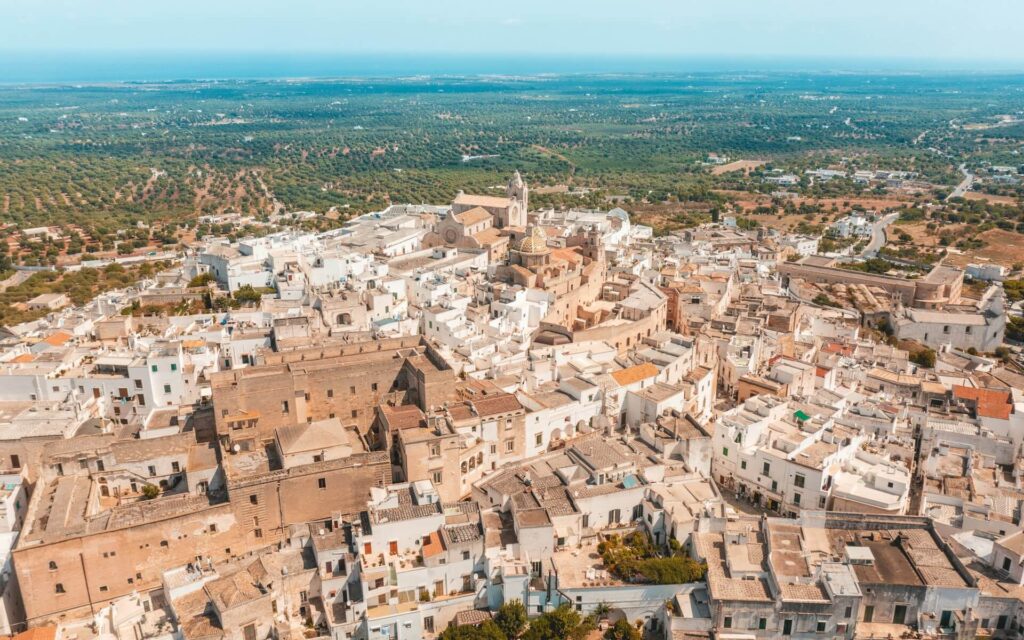
Perched dramatically across three hills at the eastern edge of the Valle d’Itria, Ostuni rises sharply above a vast plain of ancient olive groves stretching toward the Adriatic coast. Known globally as La Città Bianca (The White City), this striking destination is famous for its centuries-old tradition of whitewashing its entire historic center, a practice still strictly maintained by the local municipality today.
Beyond its postcard-perfect aesthetics, the town holds immense travel appeal as a cultural and geographic anchor for the region. According to the latest regional tourism trends report from the Region of Puglia, Ostuni welcomed 248,484 total tourist arrivals, cementing its status as the top destination in the province of Brindisi and ranking it among the top 10 most visited municipalities in the entire region. Whether you explore during the bustling summer months or the more intimate shoulder seasons, Ostuni offers a perfect blend of historic charm, coastal access, and authentic Puglian culture.
The Best Things To Do in Ostuni
Get lost in the old town
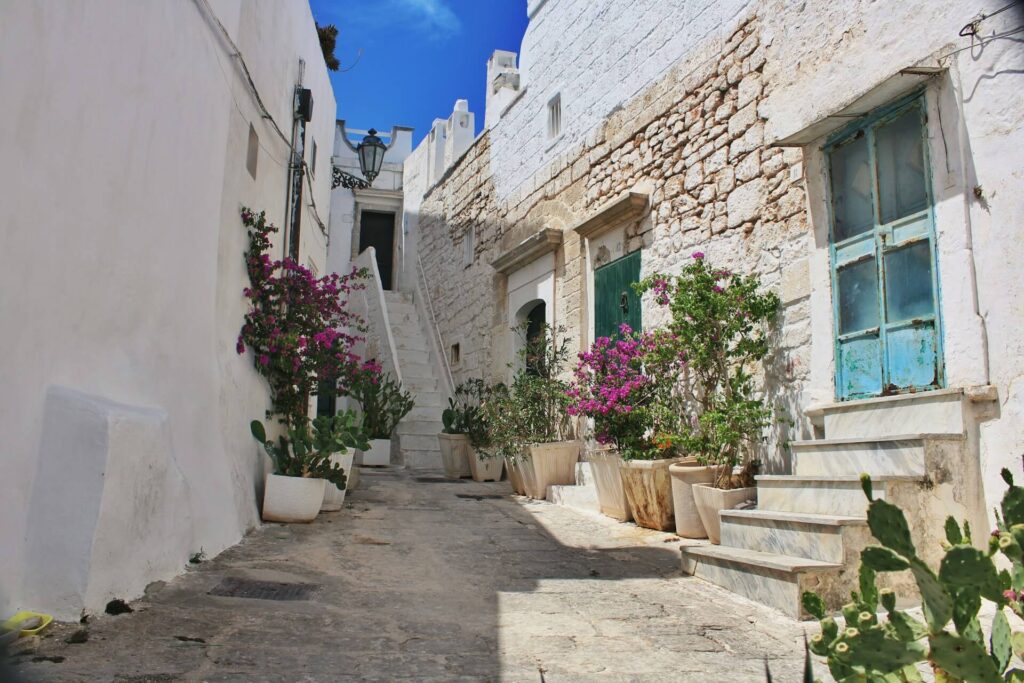
The centro storico was built across three hills specifically to confuse medieval invaders, and it still works. Alleys end without warning, stairways surface somewhere unexpected, and archways open onto courtyards that do not exist on any map. Put your phone away. This is not a town you navigate; it is one you surrender to.
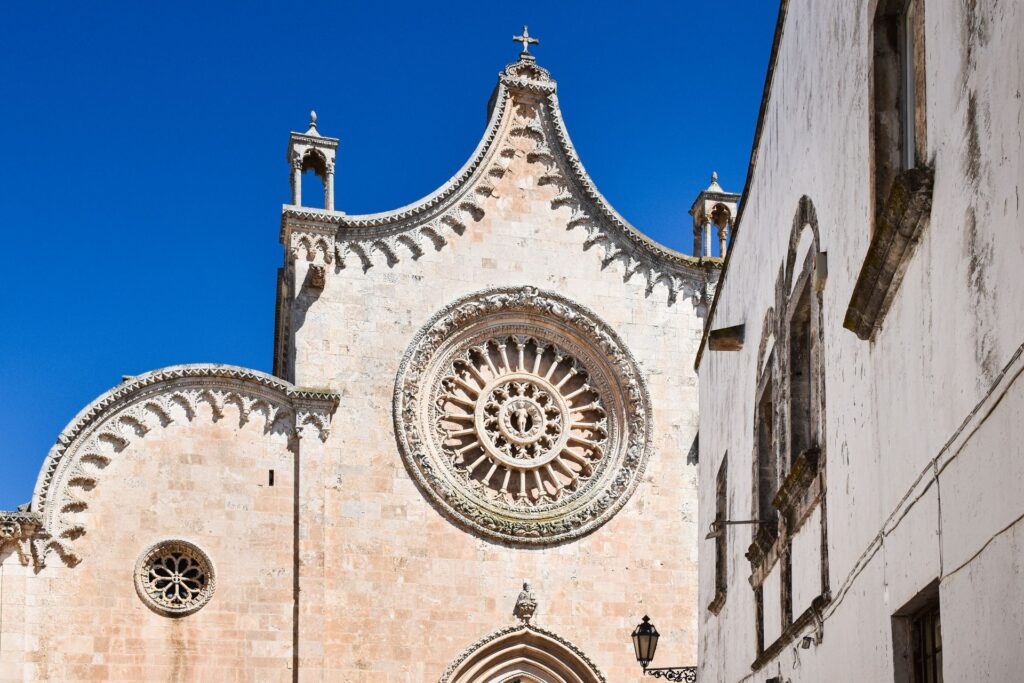
Climb toward the highest point to find the Cathedral of Santa Maria Assunta in Piazza Beato Giovanni Paolo II. Its late-Gothic facade of pale limestone features a magnificent carved rose window of 24 rays surrounding a figure of Christ Salvator Mundi. Just in front of it stands the Arco Scoppa, an elegant archway modelled on Venice’s Bridge of Sighs that connects the bishop’s palace to the cathedral. It is far more beautiful, frankly, than that description suggests.
The lanes eventually open onto Piazza della Libertà, a triangular square at the heart of the old town anchored by the Church of San Francesco and ringed by lively bars. This is where Ostuni’s evenings truly come alive. Sit down, order something refreshing, and let the traditional evening passeggiata unfold before you. The side streets hold a quiet, curated kind of shopping featuring fine linen, hand-thrown ceramics, and bespoke jewellery. It is an unhurried, peaceful experience.
Find the Best Viewpoints
The cathedral steps are the obvious choice, and they certainly earn their crowds. For something quieter, find Viale Oronzo Quaranta, the long panoramic road running alongside the old Aragonese walls. From here, the Valle d’Itria opens westward across endless silver-green olive groves, while on a clear day, you can make out the shimmering Adriatic to the east. Come in the late afternoon, when the white buildings catch the warm golden light and the whole valley softens. It is one of those rare places that genuinely looks better than any photograph could ever capture.
Visit the Saturday Market
Every Saturday morning, the area along Via Nino Sansone below the historic centre fills with a market that exists entirely for locals rather than visitors. It is a vibrant mix of clothing, fresh produce, regional ceramics, olive oil, and household goods, with nobody performing for the tourists. Go early, before the midday heat builds, and follow it with a coffee at one of the bars in the new town. It offers a wonderfully grounded glimpse into local life.
Head to the Beaches
Ostuni sits inland, but the Adriatic is only ten to fifteen minutes away, and the coast below the town gives you a few different kinds of beach day depending on what you’re after.
Rosa Marina and Torre Canne are the easy, organised option: traditional beach clubs, or lidi, with sun loungers, beachside bars and a cold drink whenever you want one.
Closer in, Torre Pozzelle has some of the clearest water within easy reach of Ostuni, a run of small sandy coves set between low rocks with very little built up around them. For the prettiest scenery, head a little further to Costa Merlata, where the shoreline breaks into a series of jagged little inlets that look their best in the late afternoon light.
For something wilder, drive about 25 minutes north toward Carovigno to Torre Guaceto, a protected marine reserve with coastal dunes, Mediterranean scrub and water that stays beautifully clear. Cars cannot reach the sand directly. You leave the car in the dedicated parking area and take a short shuttle down to the shore, and that small bit of effort is exactly why the reserve has stayed so unspoilt.
One local detail worth knowing: the right beach often comes down to the wind. When the tramontana blows in from the north, or the scirocco arrives warm off the Sahara, the coast isn’t sheltered evenly along its length, so it pays to pick your spot to suit the day rather than the name. Anyone looking after you locally will know where to send you.
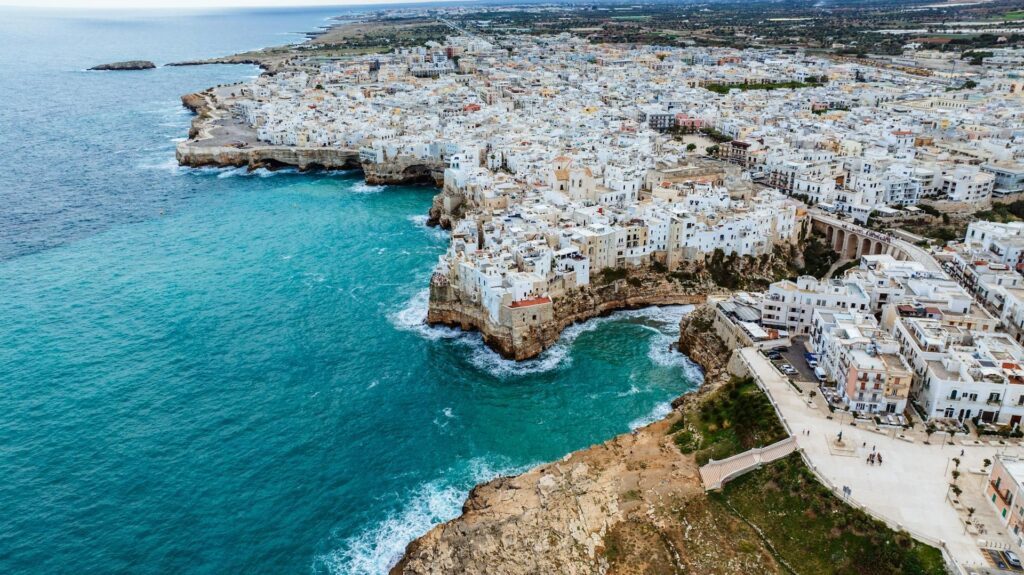
If you don’t mind a longer drive, Polignano a Mare is worth half a day on its own. About forty minutes up the coast, it’s the cliff-edge town famous for Lama Monachile, the small beach tucked into a ravine between the rocks. It gets busy in high summer, but the setting is worth it.
Use Ostuni as a base for the Valle d’Itria
Ostuni sits at the eastern edge of the Valle d’Itria, which puts the rest of the valley within easy reach. The trulli of Alberobello, the cone-roofed stone houses the area is known for, are a scenic 35 to 40 minutes away.
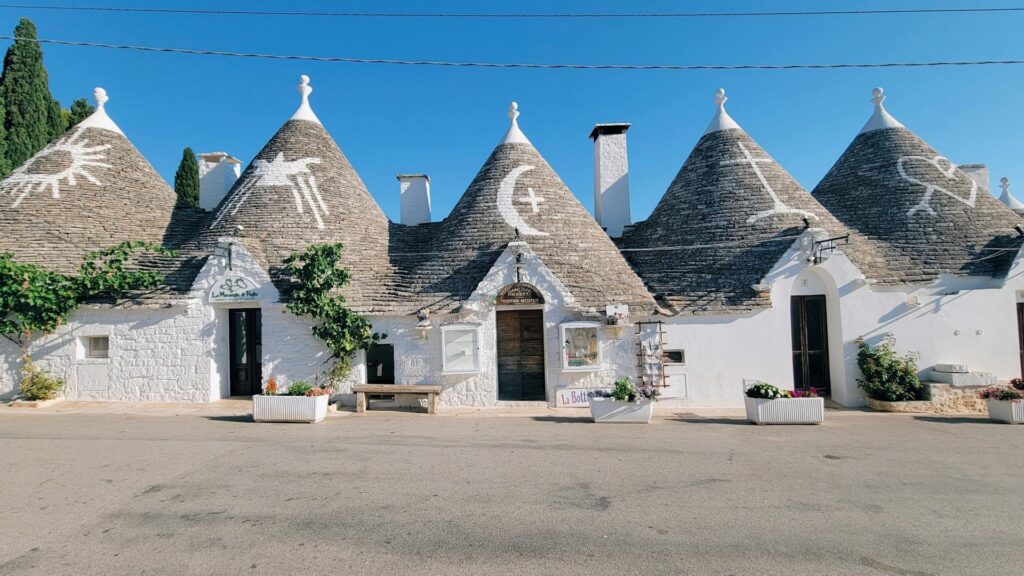
The neighbouring towns each give you a reason to make the trip. Go to Martina Franca hungry: it’s the home of capocollo di Martina Franca, a prized local cured pork, and of bombette, small parcels of grilled meat you’ll see on menus all over the valley. Locorotondo is one of the prettiest villages in Italy, a tight circle of whitewashed lanes known for its crisp local white wine, and if you happen to visit in December, its Christmas market is a lovely bonus. Cisternino is the quiet one, a small whitewashed old town that rewards an unhurried evening wander.
All of them sit within about a 30 to 35-minute drive, so the run back to Ostuni at the end of the day is an easy one.
When to Visit Ostuni
Ostuni is a year-round destination in the sense that the old town is always worth a visit. In practice, when you come shapes the experience significantly.
May and June are the best months for most visitors, with warm and reliable weather (22–28°C), the town open and busy without being overwhelmed, and the countryside at its most vivid. September and October run a close second: the heat eases, the summer crowds thin, the harvest is underway in the olive groves, and the restaurants are still fully operational.
July and August bring peak season in full force. The old town is busy at all hours, temperatures regularly exceed 35°C, and the beaches at Torre Canne and Rosa Marina are packed. This is still a good time to visit, but the evening atmosphere is hard to match and it’s a different experience. Book accommodation well in advance and plan outdoor activities for the morning.
November through March are quiet. Some restaurants close or reduce hours, and the beach infrastructure shuts down entirely. But the old town is peaceful in a way that’s genuinely rare, and Ostuni in winter light has a quality that no summer photograph captures. Worth knowing if you’re drawn to places when they belong to the people who live there.
How Long Should You Spend in Ostuni?
To truly absorb the pace of Ostuni and the surrounding Valle d’Itria, giving yourself three nights to a full week allows you to experience the region the way it is meant to be enjoyed. Rushing through on a quick day trip or a single overnight barely scratches the surface of what the area has to offer.
- A 3 to 4-Day Getaway: This is the perfect window to experience the town’s best rhythms. It gives you a dedicated day to fully lose yourself in the historic center and catch the evening passeggiata, a morning to explore the vibrant open-air markets, and plenty of time for a relaxed afternoon at the nearby coastal reserves without feeling rushed.
- A Week-Long Immersive Stay: If you are visiting during the gorgeous summer months, spending a full week in the area is the ultimate way to travel. A week allows you to establish a beautiful, relaxed rhythm by alternating quiet mornings by a countryside pool with afternoon trips to the Adriatic beaches. It gives you the freedom to explore the entire valley, including the famous trulli of Alberobello and the villages of Locorotondo and Cisternino, while returning each night to unwind in Ostuni’s premier dining scene.
Where to Stay Near Ostuni: 3 Villas from Our Collection
All 3 properties sit in the Ostuni countryside, set within ancient olive groves, each reserved exclusively for one group at a time.
A private concierge is available to all guests: from pre-arrival stocking to private chefs, local experiences, and transfers, the details are handled from the moment you book. Ostuni’s old town is a short drive from each.
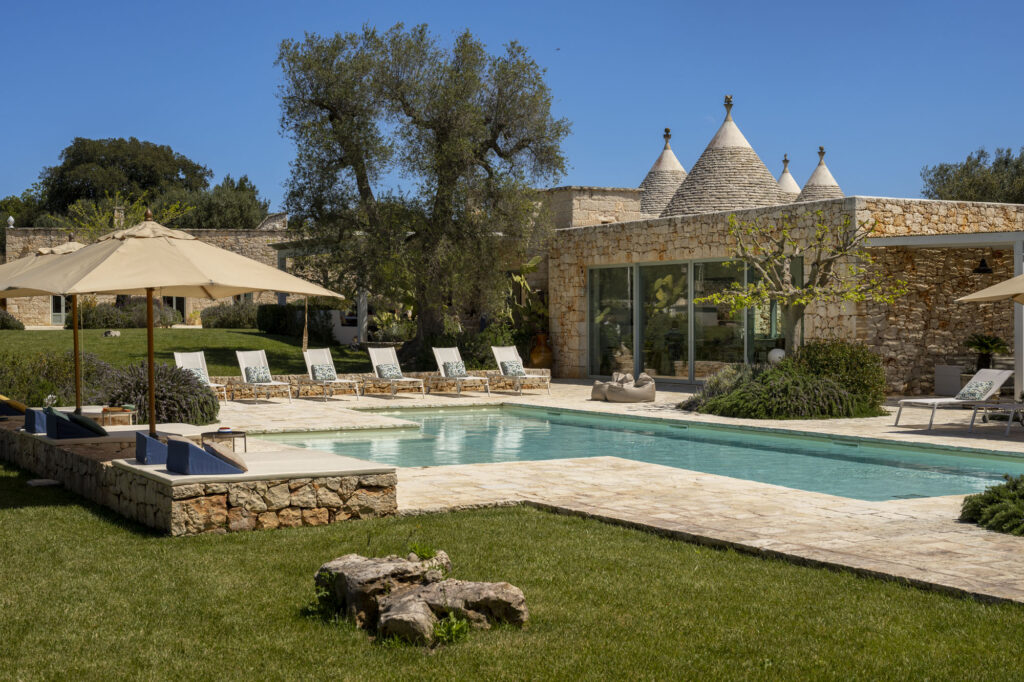
Villa Arteviva
Up to 20 guests · 9 bedrooms
A grand estate across seven hectares of olive groves, made for milestone celebrations and big groups who want to spread out in style.
→ Enquire about Villa Arteviva
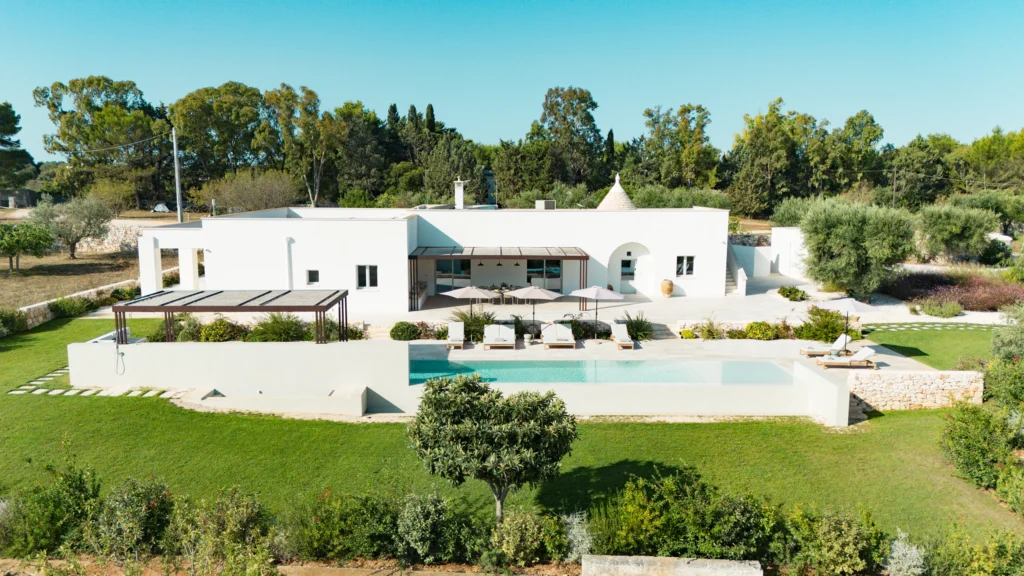
Villa Elisabetta
Up to 12 guests · 6 bedrooms
An intimate trullo retreat with a 15-metre infinity pool, made for families and close friends who want Puglia all to themselves.
→ Enquire about Villa Elisabetta

Villa Caterina
Up to 12 guests · 6 bedrooms
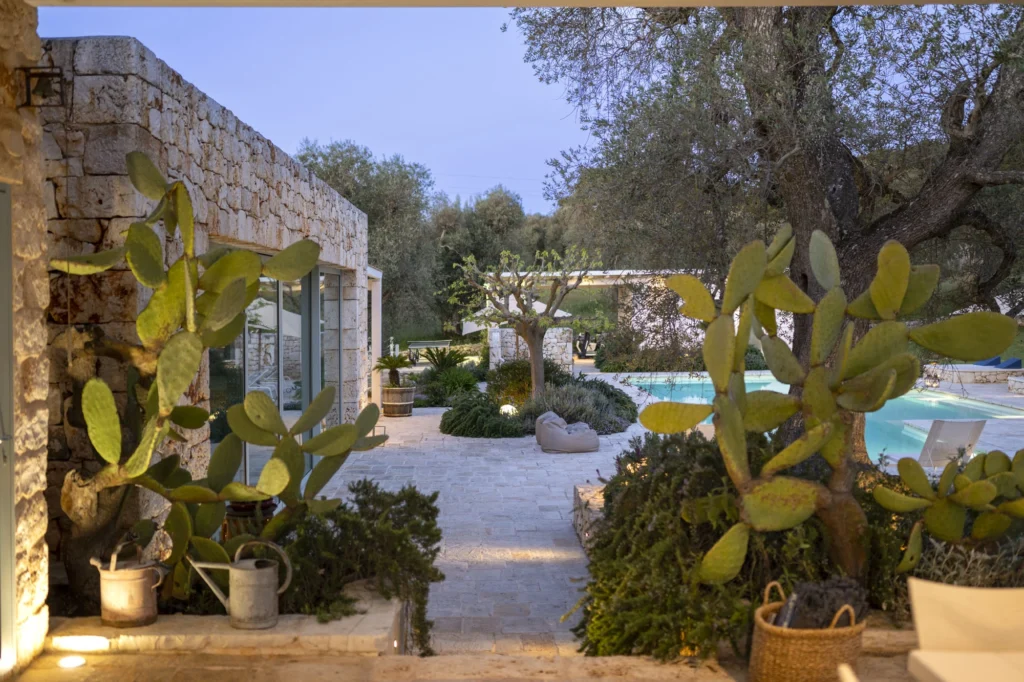
An 18th-century estate in private botanical gardens, for anyone craving a slower, more peaceful side of Puglia.
→ Enquire about Villa Caterina
Ready to Plan Your Stay in Ostuni?
The magic of Ostuni, from the quiet mornings in the old town to long, slow afternoons by the Adriatic, cannot be rushed. To truly experience the rhythm of the Valle d’Itria, you need a base that allows you to slow down and live like a local, away from the midday summer crowds.
From the expansive, grand estate of Villa Arteviva to the refined, contemporary elegance of Villa Elisabetta, our curated collection offers the perfect countryside sanctuary. Every booking introduces you to a dedicated personal concierge to seamlessly handle your arrival details, villa pre-stocking, and bespoke add-on arrangements upon request.
Ready to curate your perfect Puglian getaway? Our exclusive concierge services can bring the finest local experiences directly to your villa or across the coast:
- Bespoke Dining: Indulge in a private chef experience with personalized gourmet menus right at your villa table.
- Sea & Land Adventures: Cruise the azure Adriatic coast on a private boat exploration, or tour the countryside in a classic vintage convertible.
- Exclusive Evenings: Transform a regular night into a story with a private, candlelit sea-view concert and open bar brought directly to you.
- Explore the Properties: Browse the full Puglia Luxury Homes collection to find your perfect base.
- Get Personalized Recommendations: Connect directly with our team to discuss your travel plans, and we will match you with the ideal villa and custom itinerary.
Frequently Asked Questions
Yes, without question. The old town is one of the most visually striking in southern Italy, and its position at the edge of the Valle d’Itria makes it a good base for anyone exploring Puglia. It rewards a stay rather than a day trip.
For the old town itself, no. Trains run from Bari (around 1.5 hours) and Brindisi (30 minutes), and the historic centre is walkable from the station. For the beaches, surrounding villages, and most of the Valle d’Itria, yes, a car is essential. There is no reliable public transport linking Ostuni to the coast or to nearby towns like Locorotondo or Alberobello.
Primarily for its whitewashed hilltop old town, La Città Bianca, visible from miles across the Valle d’Itria olive groves. It’s also known as a gateway to the beaches on the Adriatic coast and as an excellent base for exploring the trulli towns and villages of the wider valley.
The old town has a good selection of boutique hotels and B&Bs. For families or groups who want more space and privacy in the countryside, a villa outside the centre is worth considering. We have three near Ostuni, set within private olive groves, and you can browse our full collection of villas in puglia across the region.